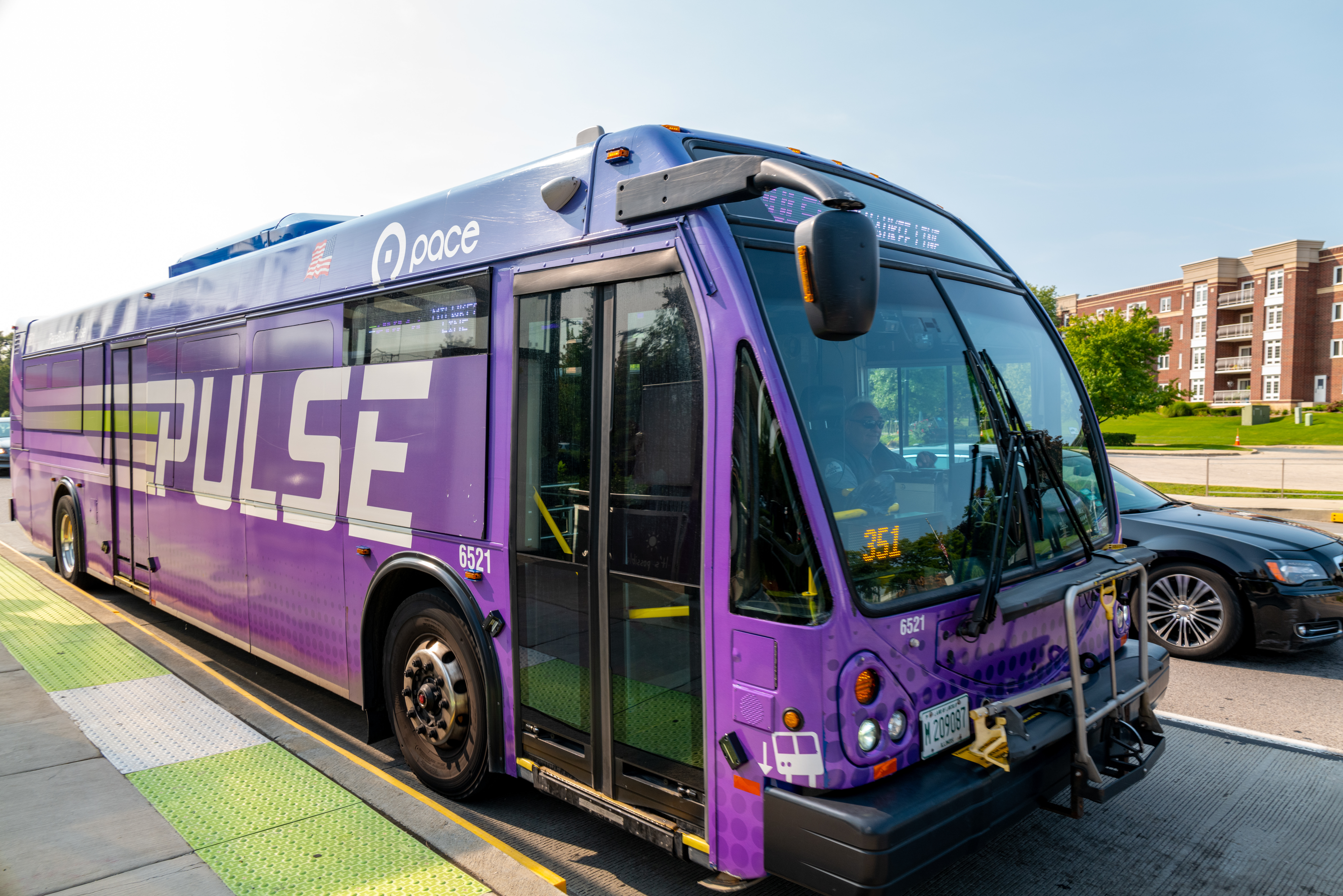


Pulse Harlem Line
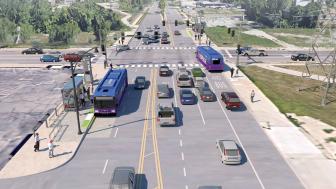
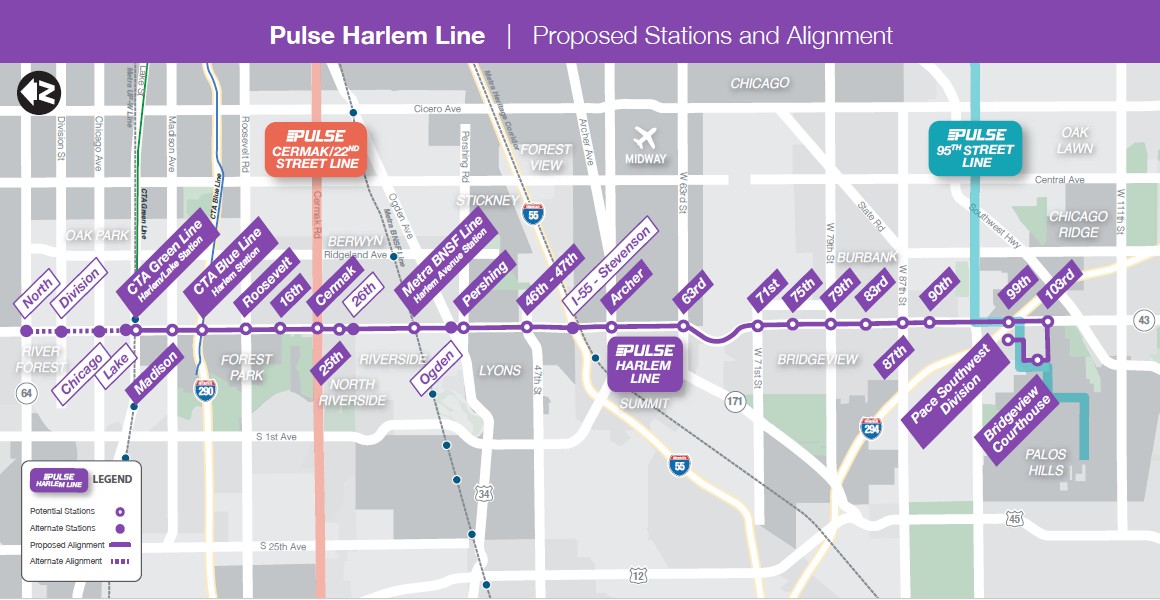
The proposed Pulse Harlem Line will bring fast, frequent, and reliable arterial bus rapid transit to communities along Harlem Avenue in west and southwest Cook County. In partnership with local community representatives, early planning efforts to identify potential service enhancements and corridor improvements have begun. This work includes research to define the project’s scope and evaluate potential station locations.
Features
The Pulse Harlem Line will enhance riders’ travel experiences with:
- Fast, frequent, and reliable service to key destinations
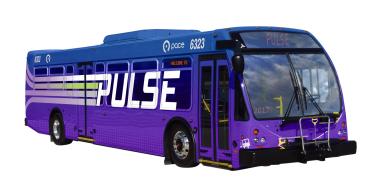
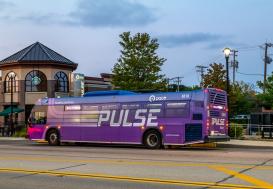
- Free Wi-Fi and USB charging on Pulse-branded buses
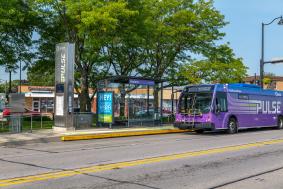
- Modern, heated stations with real-time information
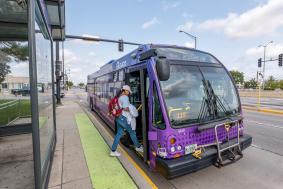
- Faster boarding and improved accessibility for everyone
- Roadway and signal improvements, such as transit signal priority, to keep buses on schedule
- Stronger connections to Metra, CTA, and other Pace services
Where are we now?
The first step for the Pulse Harlem Line is the Project Definition phase. Pace will collaborate with a Corridor Advisory Group (CAG), consisting of representatives from roadway and transit agency partners, local municipalities and nonprofit organizations, school districts, adjacent property owners, and others who represent the views of the community and transit users in the corridor. The outcome of this process will be a Project Definition Report.
What is Pulse?
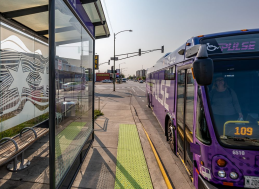
Pulse is Pace's arterial bus rapid transit (BRT) program that offers riders limited stops, modern stations with raised platforms, improved ADA access, and frequent service every 15 minutes or better. Roadway improvements in Pulse corridors consider and prioritize transit and pedestrians, improving reliability and walkability.
What are the benefits of Pulse?
Pulse gets riders to their destinations quickly with more frequent and direct service at the same low cost of riding regular fixed-route bus.
The greater frequency of Pulse service can accommodate larger numbers of passengers, who benefit from amenity-filled stations strategically placed to serve the highest ridership locations.
Pulse contributes to environmental sustainability by reducing traffic congestion and air pollution. By encouraging the use of public transportation, Pulse helps decrease the number of private vehicles on the road, leading to lower emissions and improved air quality.
Finally, Pulse provides affordable and efficient transportation options, particularly for lower-income residents and for riders with disabilities, who often rely on public transportation as their primary mode of travel. It helps bridge gaps in access to jobs, education, and other essential services.
Where are the Pulse lines located?
Pulse service and infrastructure have already been implemented on Milwaukee Avenue and Dempster Street. In addition to Harlem, lines are planned for South Halsted Street, 95th Street, and Cermak Road/22nd Street.