|
 |
Pace History & Facts
Pace was created by the 1983 RTA Act to unify the numerous disparate suburban bus agencies that existed at that time. In
doing so, fares, branding and management were made consistent throughout the region. On July 1, 1984, the consolidated agency
began operations as the Suburban Bus Division of the Regional Transportation Authority. A year after that, the brand name
'Pace' was established.
Pace is governed by a 13 member Board of Directors
comprised of current and former suburban mayors and the Commissioner of the Mayor's Office for People with Disabilities for
the City of Chicago.
For its first few years, Pace focused on the unification efforts and renewing its bus garages and fleet, but rapid population
and employment growth in the suburbs led to multiple strategic planning and long range planning efforts that took place in
the late 1980s and throughout the 1990s. In 2002, Pace launched the biggest transit initiative ever proposed for Chicago's
suburbs, called Vision 2020: Blueprint for the Future. The innovative plan is creating
a faster network that is more convenient and simpler to understand.
Accessibility has always been a hallmark of Pace service. Pace provided ''Section 504'' service to people with disabilities
several years before this type of service was required by the Americans with Disabilities Act. In 2006, Pace had established
itself as a leader in providing efficient, quality service to people with disabilities, and the Illinois legislature designated
that Pace would assume responsibility for ADA paratransit in Chicago from the CTA. The move made Pace the largest providers
of paratransit service in the United States.
Pace established one of the largest vanpool programs in the nation and became the regional ridesharing administrator for
Northeastern Illinois in 2006, bringing coordination of carpools into the program. PaceRideShare.com is the outlet for these
services, offering commuters the ability to create a profile and gather information on others with similar travel patterns
in order to form carpools or vanpools.
| Chairman: |
Richard Kwasneski |
| Executive Director: |
T.J. Ross |
| Headquarters: |
550 W. Algonquin Road, Arlington Heights, IL 60005 |
| Operating Divisions: |
12 |
| Service Area: |
3,446 square miles, larger than the state of Delaware and about 15 times the size of
the City of Chicago; it covers six counties - suburban Cook, DuPage, Kane, Lake, McHenry and Will - and 284 municipalities. |
| Population of service area: |
Approximately 8.3 Million Residents |
| Total ridership in 2012: |
39,194,457 |
| Regular one way fare: |
$1.75 Adults; $0.85 Reduced |
| Facilities: |
9 Transportation and Transfer Centers, 18 Boarding and Turnaround Facilities, 9 Park
and Ride Facilities |
| Fixed bus routes: |
209 (all accessible) |
| Paratransit buses: |
454 |
| Vanpools: |
694 |
| Vanpool ridership in 2012: |
2,187,283 |
|
 |
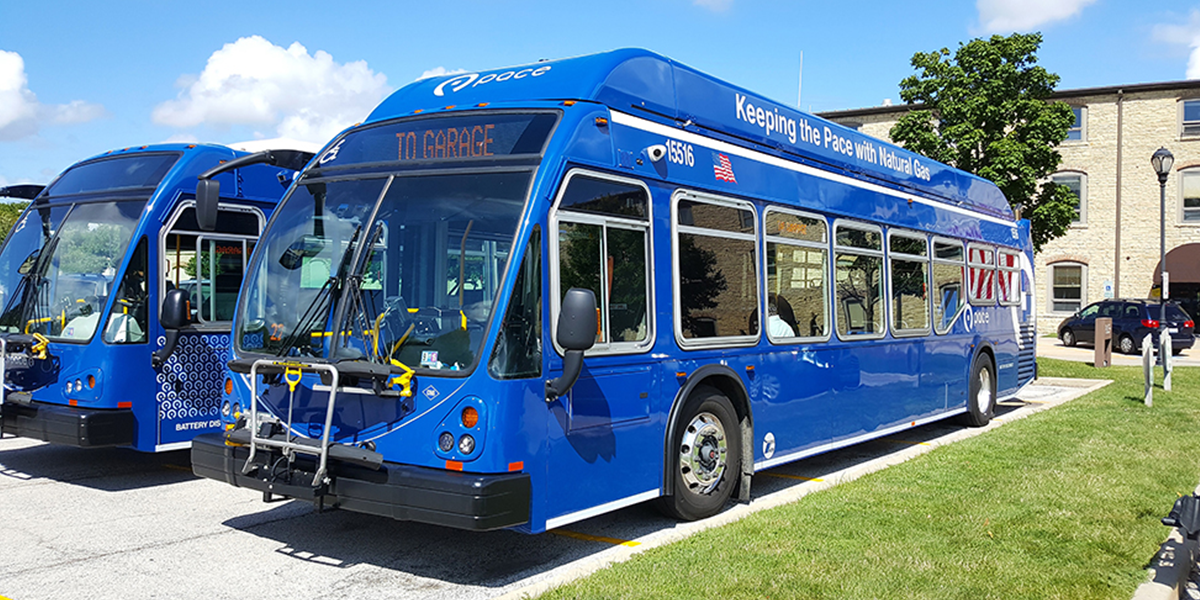
Photo Credit: Ballogg - Ballogg Photography of Chicago
|